Brutalism: Difference between revisions
No edit summary |
|||
| Line 48: | Line 48: | ||
File:KoerferHouse-Moscia.jpg|Koerfer House (1963-66) in Moscia, Switzerland, by Marcel Breuer & Herbert Beckhard | File:KoerferHouse-Moscia.jpg|Koerfer House (1963-66) in Moscia, Switzerland, by Marcel Breuer & Herbert Beckhard | ||
File:VillaDenin-Djursholm-Stockholm.jpeg|Villa Denin, Djursholm, Stockholm by Léonie (Lola) Geisendorf. | |||
</gallery> | </gallery> | ||
Revision as of 18:18, 10 January 2021
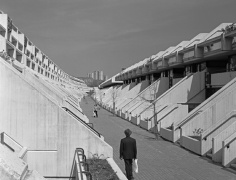
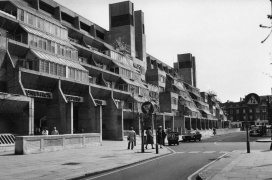
Brutalism as a housing style, is most associated with the kind of concrete, council estate that appeared in Britain’s major cities in the two decades after the Second World War.
Background
In this post-war period, the bomb sites that scarred many British cities were an invitation to experiment at a time when people were seeking a brave new world, after another decade of carnage. Council architects departments became hotbeds of innovation with architects like [ ] and [ ].
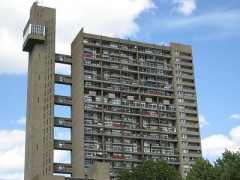
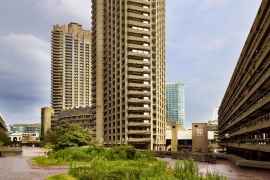
Many of the estates that were produced at this time have become famous and celebrated in the architectural community. Trellick Tower and the Barbican in London are loved and hated in equal measure. The same holds true for Brutalist icons in the north like Biker and [ ]. For tenants, they have proved a mixed blessing. Over time, they became known as sink estates In a recent article in the Guardian <ref> Guardian Review of Books - Simon Jenkins reviewing ‘100 Buildings, 100 Years’ - The Guardian 15th November 2014. </ref>, critic Simon Jenkins said “Brutalism left some truly awful buildings....[that] proved hard to maintain, easy to vandalise and unadaptable to new uses”.
It is easy to focus on the problems that the Brutalist estates have delivered, however it must be remembered that many of the families first housed in them had moved in from decrepit slums with little or no sanitation. Whilst we can criticise from a position of hindsight, for many of these families, these homes were a revelation.
With architectural styles, there is always someone looking to re-invent the past. Neo-Brutalism has sought to right some of the wrongs of the post-war era. Although, it is mainly a style used for expensive one-off houses like the Pitch House or exquisite public buildings like the Hepworth Gallery
Brutalist Blocks of Flats
sfsdf
-
-

-
-
-
-

The Grade II listed Park Hill Estate, Sheffield
-
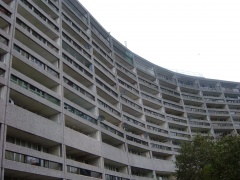
Cables Wynd House, better known as the Banana Block, in Leith, Edinburgh


Brutalist Houses
ljlskdjfjs
-

-

‘Habitat 67’, a private house by architect Moshe Safdie.
-
-

-

-
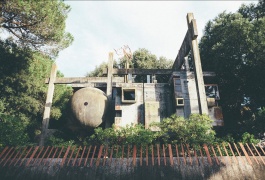
Casa Sperimentale (experimental house) 1969 Fregeme, Italy. Architect Giuseppe Perugini’s Brutalist exploration of ideas pertaining to form and space.
-

The brutalist 'Round House' at Herentals, Antwerp, Belgium by Jackie Cuylens 1970
-

The Brunnadernstrasse Houses by Atelier5 In Bern, Switzerland.
-

Housden House 1960, by architect Brian Housden in London NW6
-

Koerfer House (1963-66) in Moscia, Switzerland, by Marcel Breuer & Herbert Beckhard
-

Villa Denin, Djursholm, Stockholm by Léonie (Lola) Geisendorf.


Brutalism In The Arts
-
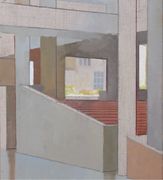
‘Looking Through Spaces at the Barbican’ by artist Lee Fether
-
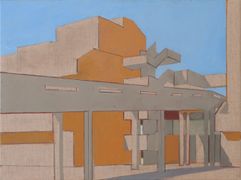
'Thamesmead Walkway' oil on raw linen by artist Lee Fether


See Also In Chimni
ChimniWiki Is My House 'Art Deco'?
Other Interesting Web Sites
Cold House - A brilliant blog about modern Brutalist houses
Brutalist Construction - A web site full of Brutalist Case studies
Tower Block - An Academic Approach
Brutalism In The Movies and On TV
Books We Liked
[Housing of the London County Council
References
<references />