Tudor
This is the main page for the Tudor category of articles.
Text
Notable Tudor Houses
-
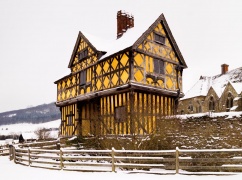
The Grade I Stokesay Castle: the finest and best-preserved fortified medieval manor house in England
-

'DeVere House' in Lavenham, Suffolk. Originally built in the 14th-century for the wealthy de Vere family, it was used to represent Harry's childhood home in Godric's Hollow.
-
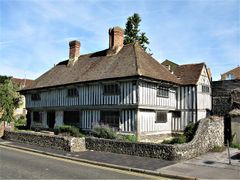
The Tudor House, Margate, Kent. Built in 1525, is a unique example of a ‘transitional house’ – bridging the gap between medieval open-hall and early-modern houses with two storeys throughout.
-

The late 15th century timber-framed Tudor House & Garden is Southampton’s most important historic building.
-

Avoncroft Museum of Historic Buildings, Bromsgrove, Worcestershire. A collection of restored, historic buildings from the industrial past of the West Midlands.
-
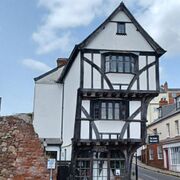
The House That Moved, Exeter. Built in the late Middle Ages 1420 - 1460 ; raised on jacks and relocated in 1961 to make room for a bypass road. Grade II listed.
-

Ordsall Hall, Salford is a formerly moated Tudor mansion, the oldest parts of which were built during the 15th century - http://www.salfordcommunityleisure.co.uk/culture/ordsall-hall
-

Queen Elizabeth’s Hunting Lodge in Epping Forrest, Chingford, East London A Tudor Completed in 1543 for King Henry VIII, It was once used to view the deer chase across Chingford plains. Queen Elizabeth I visited the Lodge in 1588 to the news of the defeat of the Spanish Armada
-
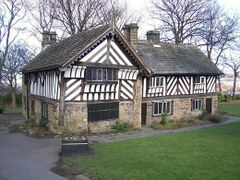
The Bishops' House, Sheffield is a half-timbered Tudor house. It was built c1500 and is one of the three surviving timber-framed houses in the city. It was said to have been built for two brothers, John and Geoffrey Blythe, both of whom became Bishops. There is, however, no evidence that they ever lived in this house


See Also In Chimni
Chimni Wiki Page Houses Used In Wolf Hall
Other Interesting Sites
Sunday Times Article 'We're Going Tudor House Mad'
Books We Liked
Tudor Houses Explained. Trevor Yorke. Published 2009 by Countryside Books. ISBN 1 84674 150 0